

Relaxation and Nervous System Down Regulation for Sleep
Sleep Like a Pro | Week 4
By Dr. David Feuz, DCN, CNS, LDN, BCHN

Optimizing your sleep environment, maintaining metabolic integrity, and aligning your circadian rhythms are all vital pillars of high-performance sleep. However, even with the perfect room and the perfect schedule, one critical piece of the puzzle remains: the "software" running in your brain, which is your nervous system. For many individuals, the body stays stuck in an "on" position (the sympathetic nervous system / “fight-or-flight”) even when the day is complete.
Sleep is a process of down-regulation, requiring your parasympathetic nervous system (rest-and-digest) to take the wheel. If you find yourself lying in bed with a "racing mind" or tight muscles, your nervous system is likely still firing as if you are in a high-alert environment. By offloading stress, clearing cognitive "tabs" in your brain, and using targeted sensory anchors, you can quiet the noise and finally prime your system for deep, uninterrupted recovery.
To successfully shift from 'active' to 'recovery' mode, you must address the following three factors that dictate your nervous system's state:
Managing Caffeine’s Half-Life
Caffeine is a potent stimulant that blocks your brain’s "sleepiness" signals. It has a long half-life, meaning it stays in your system for hours. If you drink coffee or energy drinks after 12:00 PM, you are effectively "masking" your natural sleep pressure, preventing your brain from realizing how tired it actually is when it’s time to hit the rack. Research suggests that a standard cup of coffee should be consumed at least 8.8 hours before bedtime, while a standard serving of a high-dose pre-workout supplement requires a staggering 13.2-hour window to avoid disrupting your sleep architecture (Gardiner et al., 2023).
Clearing the Cognitive Load
When you keep your to-do list in your head, your brain treats those tasks as "open loops" or background processes. This cognitive interference prevents the mental disengagement necessary for sleep onset. A "Brain Dump," which is the act of physically writing down future tasks, offloads these stressors. Research shows that individuals who spend five minutes writing a specific "to-do" list for the following days fall asleep significantly faster than those who write about completed tasks, as it offloads the "worry" of remembering (Scullin et al., 2018).
Aromatherapy
Aromatherapy using essential oils like lavender has long been utilized for its calming and sedative properties, providing a safe and non-pharmacological way to signal the body to relax. Scent has a unique, direct pathway to the brain's emotional center, making it a powerful tool for shifting out of a high-alert state. Recent clinical research by Lucena et al. (2024) demonstrates that nightly inhalation of lavender essential oil significantly improves overall sleep quality compared to a placebo. In this study, participants using lavender reported not only better sleep but also a significant reduction in fatigue levels over a four-week period, with no adverse side effects. This suggests that incorporating targeted scents can be a highly effective, well-accepted strategy for deepening rest and enhancing daily energy recovery.
Manual Nervous System Override
You can signal your body to rest by using specific sensory triggers. Breathing techniques like box breathing stimulate the Vagus nerve, which signals to the heart and brain that you are safe. When combined with gentle movement to release physical tension and calming botanical support, you create a biological anchor that tells the entire body the mission is complete. Research comparing evening social media use to slow-paced breathing interventions found that just 15 minutes of dedicated breathing significantly improved subjective sleep quality and increased overnight Cardiac Vagal Activity (CVA). By prioritizing slow, rhythmic breathing over late-night scrolling, you manually increase your heart rate variability (HRV) and signal to your cardiovascular system that it is safe to enter a restorative state (Jingwen et al., 2026).
Aromatherapy is another strategy one can use to regulate the nervous system and promote a sense of calm. Using essential oils like lavender has long been utilized for its calming and sedative properties, providing a safe and non-pharmacological way to signal the body to relax. Scent has a unique, direct pathway to the brain's emotional center, making it a powerful tool for shifting out of a high-alert state. Recent clinical research by Lucena et al. (2024) demonstrates that nightly inhalation of lavender essential oil significantly improves overall sleep quality compared to a placebo. In this study, participants using lavender reported not only better sleep but also a significant reduction in fatigue levels over a four-week period, with no adverse side effects. This suggests that incorporating targeted scents can be a highly effective, well-accepted strategy for deepening rest and enhancing daily energy recovery.
Ultimately, these strategies provide the manual override your system needs to silence the noise of the day and signal that it is safe to recover.
Self-Reflection Quiz
Evaluate your nervous system regulation:
Do you consume caffeine (coffee, energy drinks, soda) within 8 hours of bedtime?
Does your mind start "racing" with tomorrow's to-do list the moment your head hits the pillow?
Do you find it difficult to physically relax your muscles or slow your breathing once you are in bed?
If you answered ‘yes’ to any of these, you are likely experiencing nervous system dysregulation. You aren't "bad" at sleeping; you just need to learn how to manually power down.
Understanding the "Why" is the first step, but the "How" happens in the app. This week, we are challenging you to support your nervous system.
Take control of your sleep hygiene over 28 days. By stacking small, repeatable actions, you can help achieve deeper sleep, better energy, and stronger days.
Join Eagles from across the nation, 01 - 28 MAY, as they take on the Eagle Fit: Sleep like a Pro Challenge.
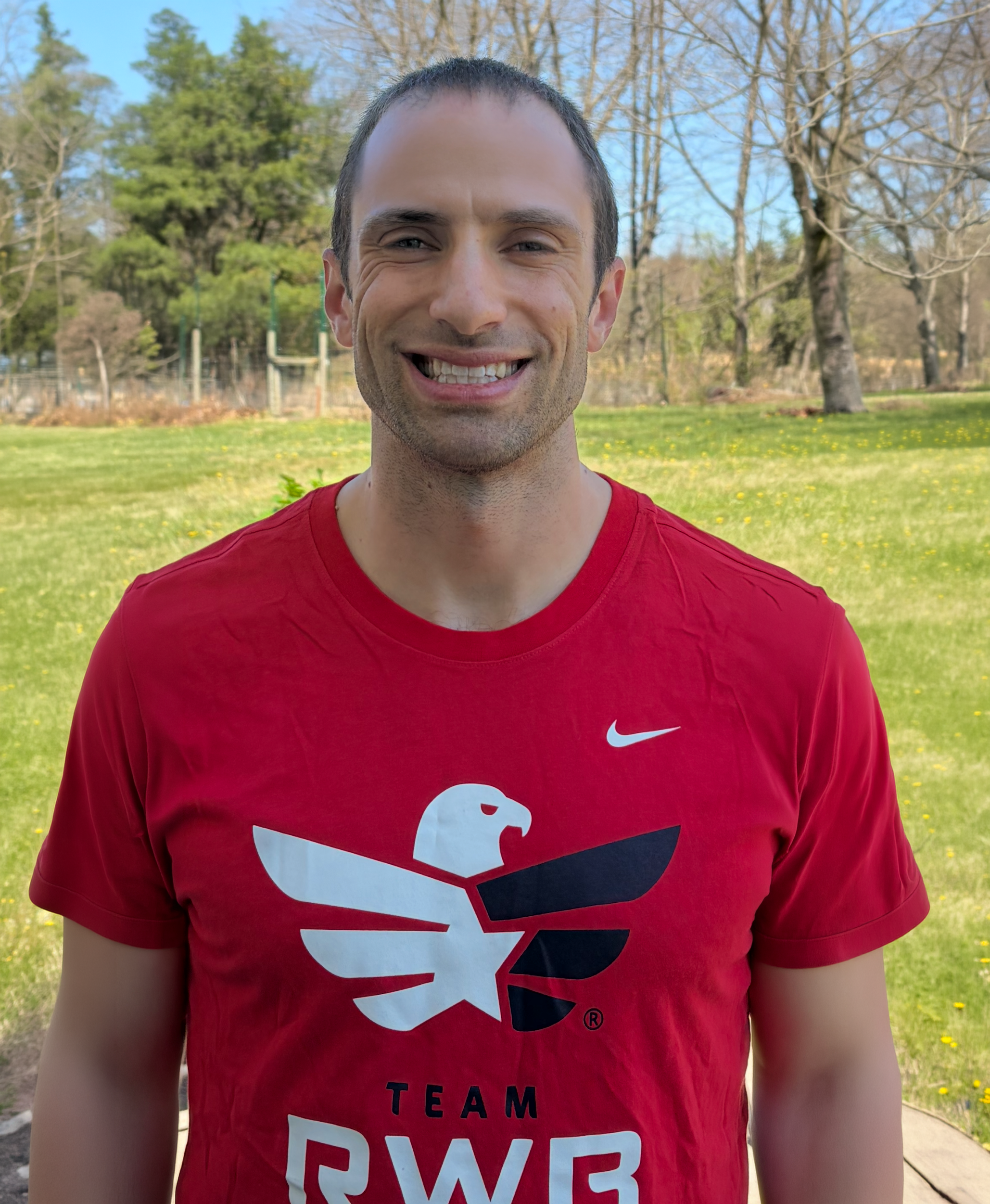
David Feuz, DCN, CNS, LDN, BCHN
As a U.S. Coast Guard veteran with 8 years of experience in search and rescue and maritime security, David knows first-hand how sleep deprivation impacts performance.
Currently, David serves as the Academic Department Chair for Nutrition at Purdue University Global and the Director of Nutrition Education at Holistic Consulting, LLC. He holds multiple board certifications/licenses (Certified Nutrition Specialist, Licensed Dietitian Nutritionist, & Board Certified in Holistic Nutrition), a Doctorate in Clinical Nutrition, and a background in integrative health.
David is excited to help the Team RWB community optimize their health from the cellular level up by mastering the most critical pillar of performance: sleep.
References
Gardiner, C., Weakley, J., Burke, L. M., Roach, G. D., Sargent, C., Maniar, N., ... & Halson, S. L. (2023). The effect of caffeine on subsequent sleep: A systematic review and meta-analysis. Sleep Medicine Reviews, 69, 101764. https://doi.org/10.1016/j.smrv.2023.101764
Laborde, S., Hosang, T., Mosley, E., & Dosseville, F. (2019). Influence of a 30-Day Slow-Paced Breathing Intervention Compared to Social Media Use on Subjective Sleep Quality and Cardiac Vagal Activity. Journal of clinical medicine, 8(2), 193. https://doi.org/10.3390/jcm8020193
Jingwen Hu, Mei Sin Chong, Yaqiong Jia, Yue Wu, Jieqiong Li, Wenru Wang (2026), Effects of lavender essential oil inhalation on sleep quality and fatigue in patients with chronic heart failure: a randomized controlled trial, European Journal of Cardiovascular Nursing, https://doi.org/10.1093/eurjcn/zvag006
Scullin, M. K., Krueger, M. L., Ballard, H. K., Pruett, N., & Bliwise, D. L. (2018). The effects of bedtime writing on difficulty falling asleep: A polysomnographic study comparing to-do lists and completed activity lists. Journal of experimental psychology. General, 147(1), 139–146. https://doi.org/10.1037/xge0000374