

Not a Runner? Meet Your New Favorite Cardio: Rowing
By Cindy Moore
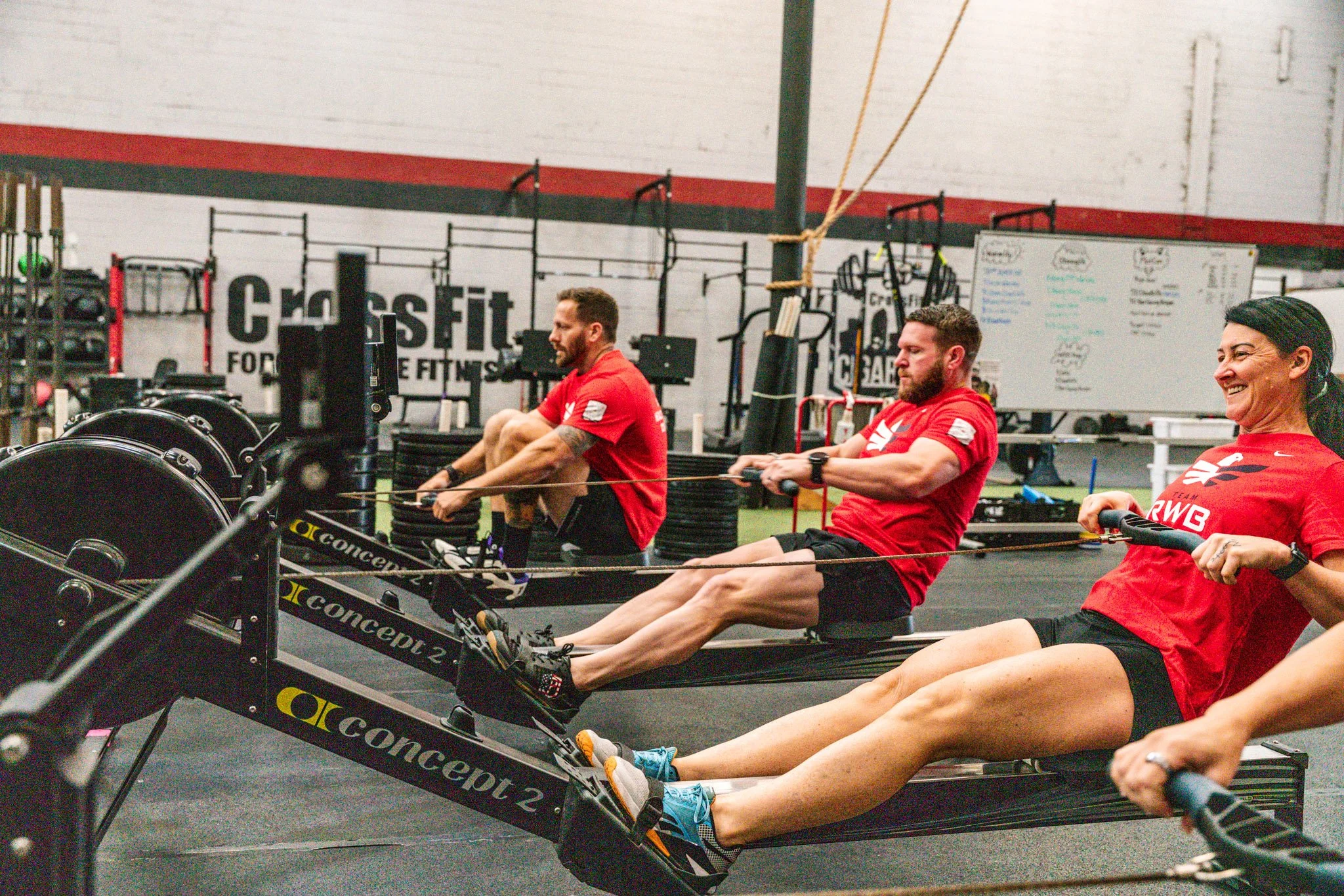
I don’t know about you, but my body doesn’t like running anymore, at least not for very long stretches. That’s where rowing comes in. It allows me to work for longer durations at an elevated heart rate while also giving me a total body workout. Many people give the rower a side eye, overlooking its potential and not fully understanding what it can offer in return.
What’s in it for you?
Rowing gives you a lot of return on your investment. More than just cardio, rowing uses your legs, core, back, and arms to create one powerful stroke. This low-impact option is kinder to your joints than many other cardio choices. I’m looking at you, running.
Another benefit is counteracting long hours spent sitting by strengthening your posterior chain, the muscles that help support good posture. No matter your fitness level, rowing can be scaled to meet you where you are.
Let’s get started
Good rowing isn’t about throwing your body forward and back as fast as possible. If you were actually on the water, that would waste energy without gaining much distance. Rowing is all about rhythm and sequencing.
Each stroke moves through four phases and should follow about a 1:2 tempo, meaning the recovery takes about twice as long as the drive. When done well, rowing feels smooth and powerful, not chaotic and rushed.
The phases are:
Catch
Drive
Finish
Recovery
The Catch
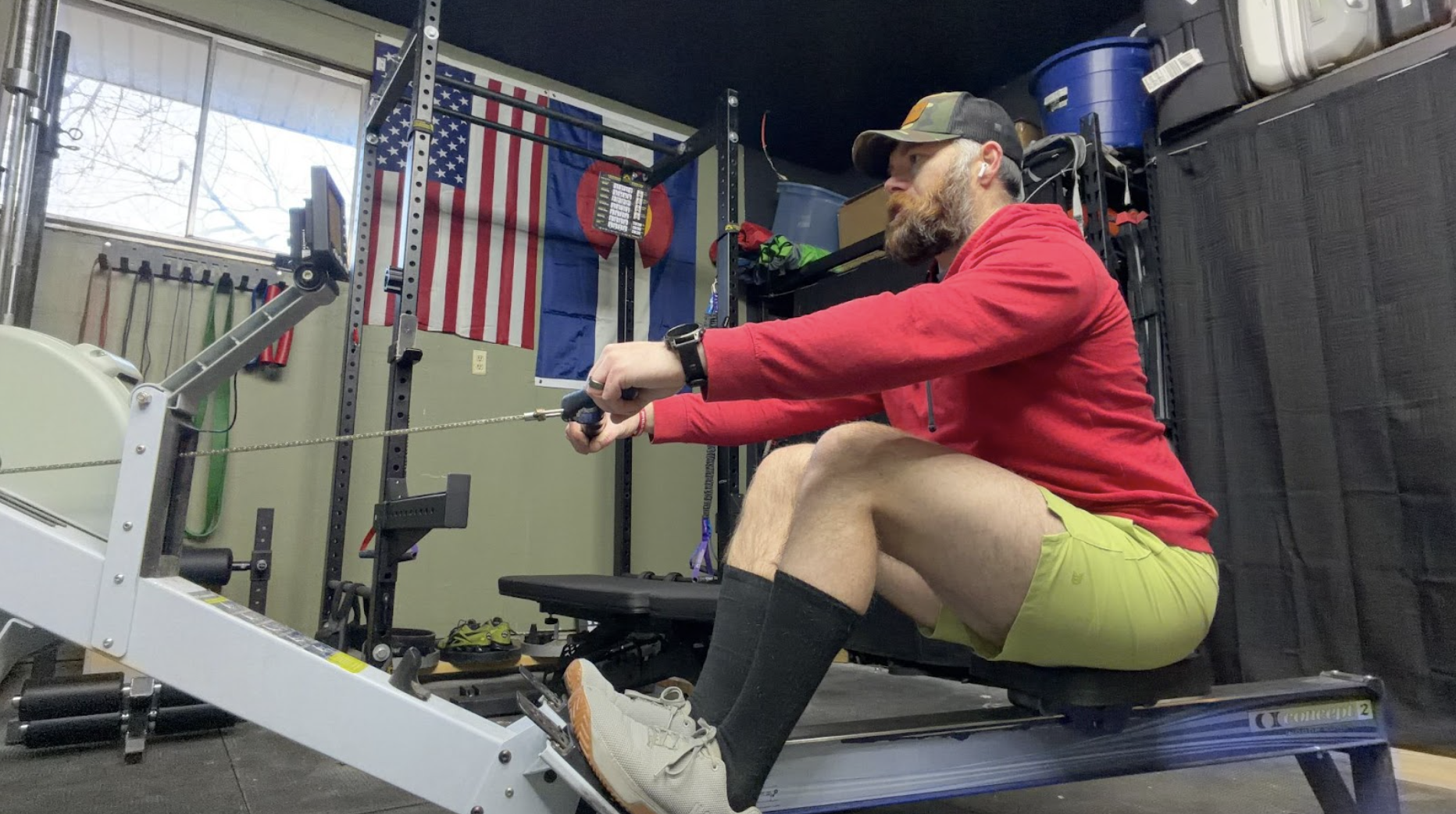
Let’s start at the beginning. Adjust the foot pedals so the strap aligns with the bottom of your shoelaces. Sit tall with knees bent, shins vertical, core engaged, and a slight forward lean. Arms are extended straight, holding the handle with relaxed, flat wrists.
The Drive
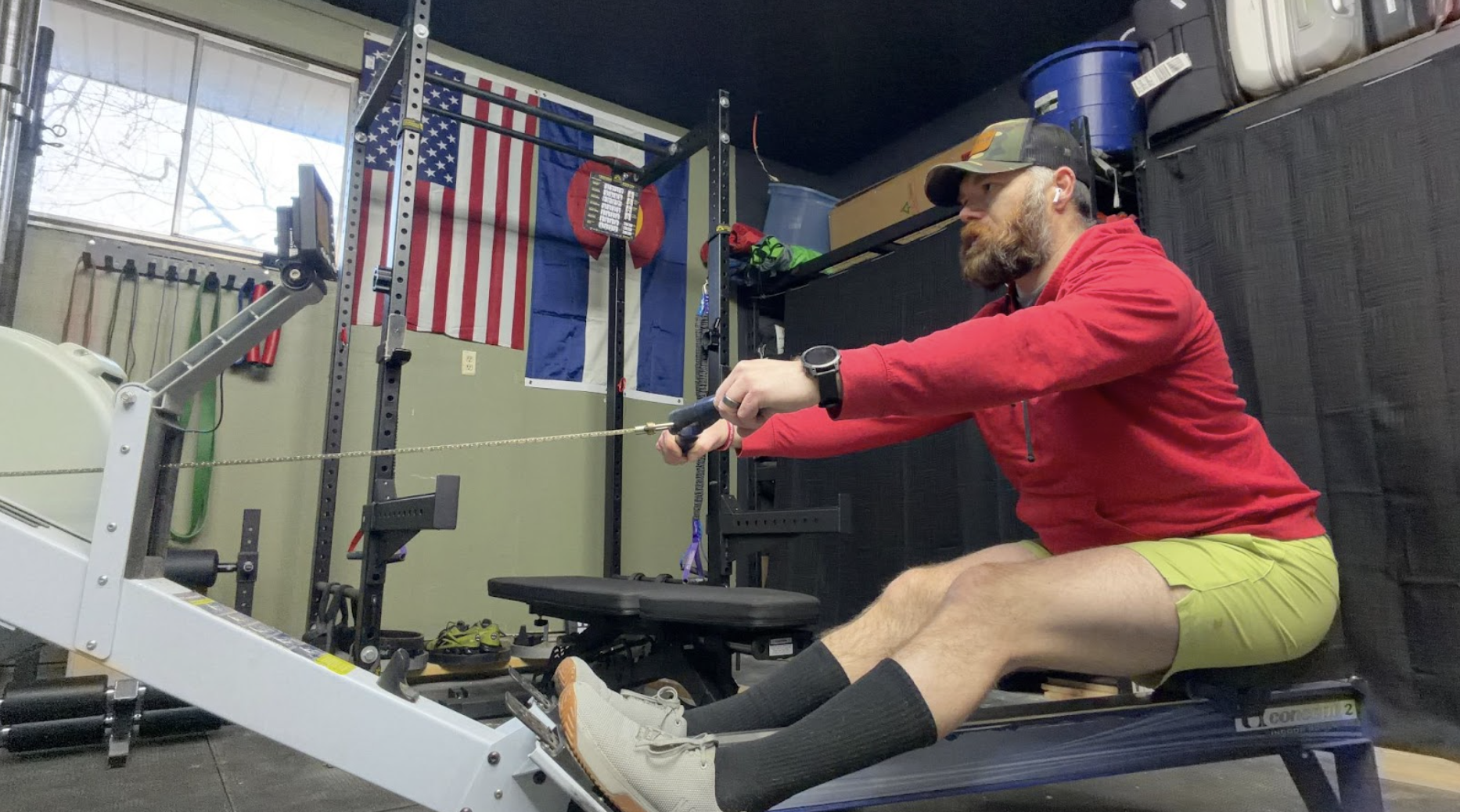
Legs move first, initiating the drive by pushing through the heels. Arms remain straight, shoulders relaxed, and back strong. As your legs reach about half extension, your hands should be near your knees, and your torso moves to an upright position. Finish the drive by pulling the handle toward your body, aiming for your belly button.
The Finish
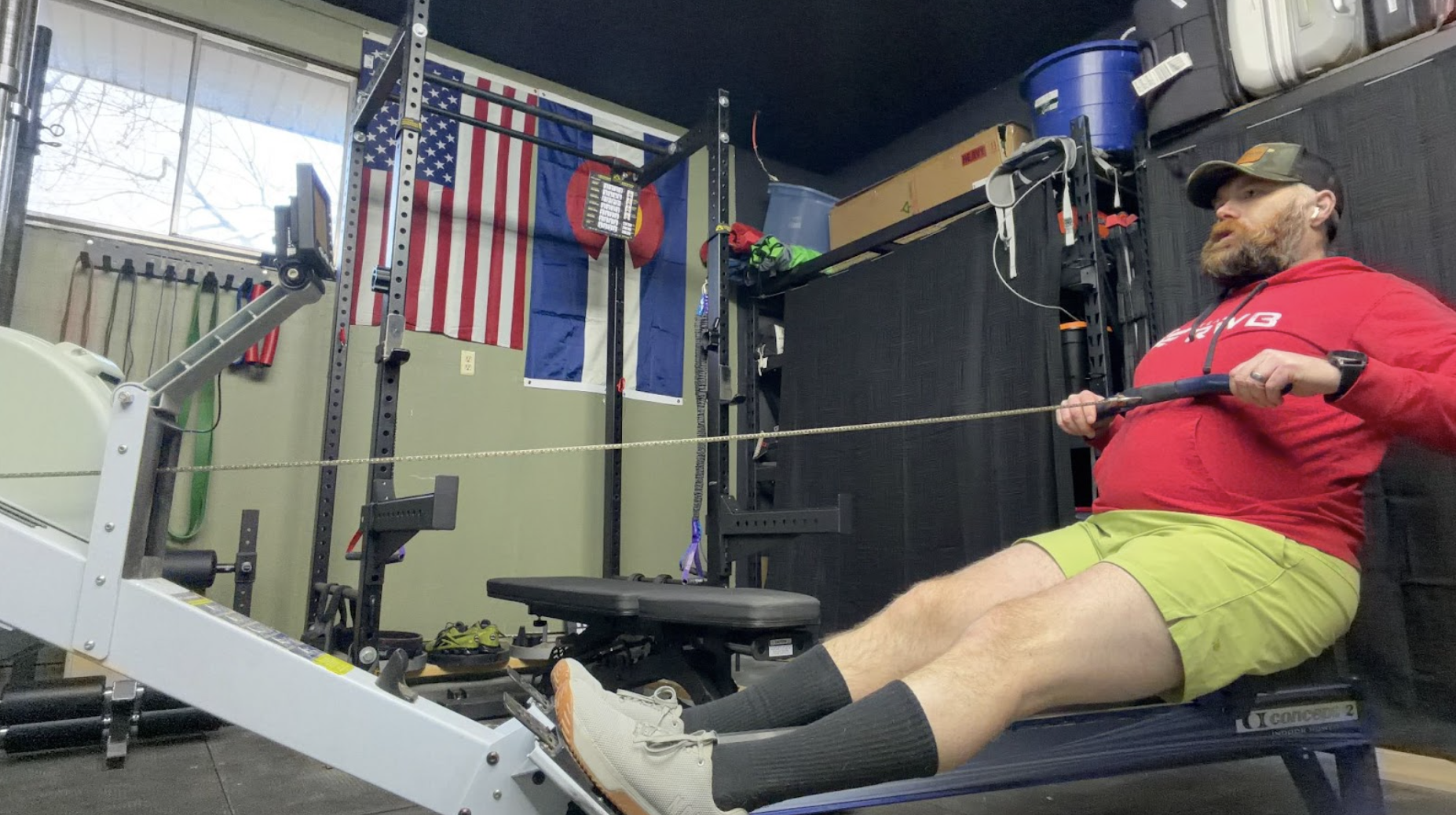
Legs are fully extended, and arms are at your sides with the handle at your lower chest. The catch, drive, and finish all happen during the “1” portion of the tempo.
The Recovery
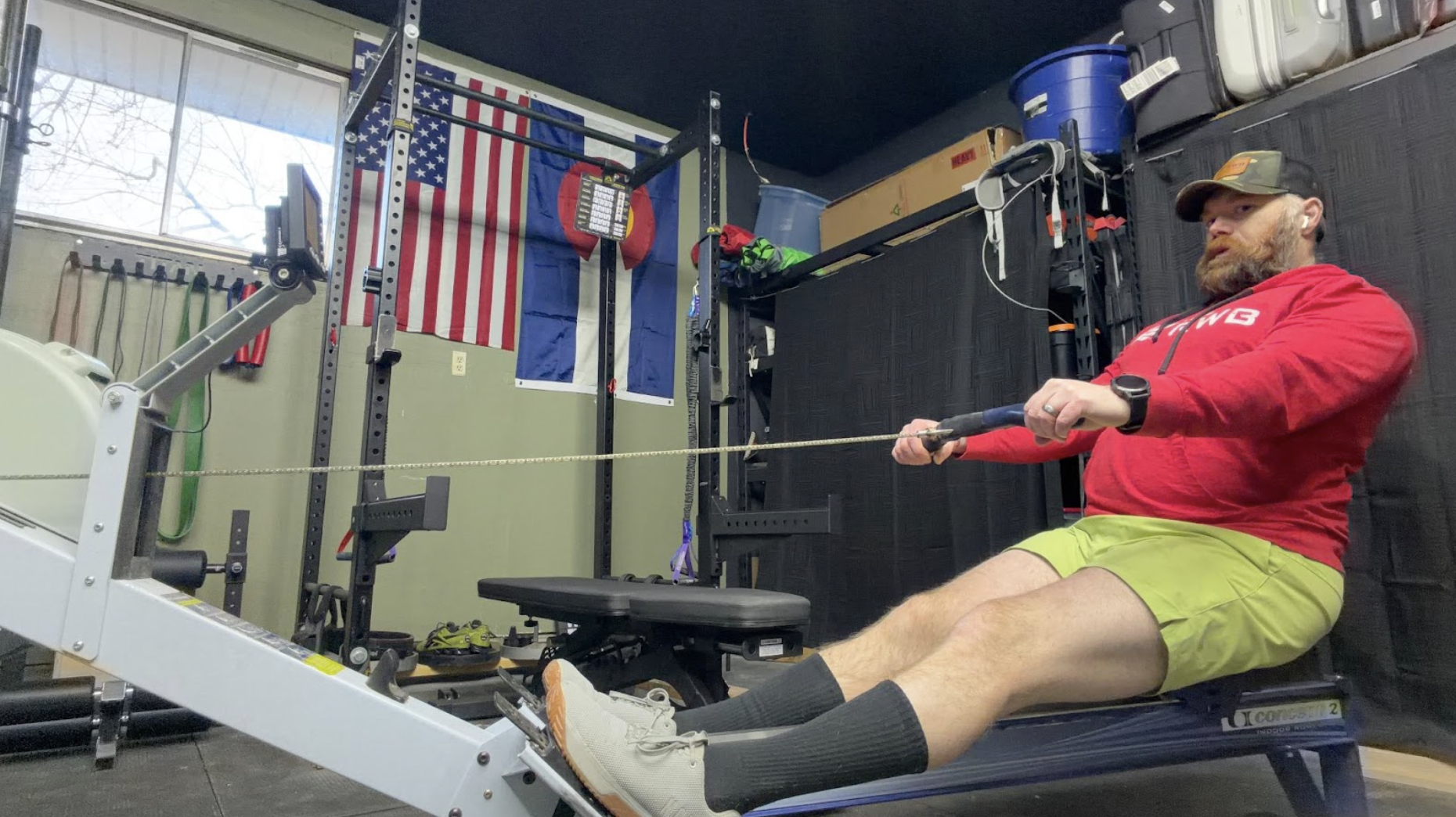
First, extend your arms forward away from your body. Next, hinge your torso forward at the hips while keeping your core engaged and shoulders relaxed. Lastly, bend your knees and return to the catch position. The recovery happens during the “2” portion of the tempo.
Bringing it all together
This may feel like a lot at first, but as long as you remember the sequence “Legs, Back, Arms, Arms, Back, Legs,” you’ll be on the right track. You don’t have to be perfect — just remember, slow is smooth and smooth is fast.
Check out the video below to see this in action and try the drills to build confidence in your stroke.
Interested in learning more? The Functional Fitness group has two options for you to add rowing to your routine. Check out Eagle Nation Row, a pre-programmed rowing workout on Thursdays, you can do whenever it fits your schedule best. If you are looking for a live class environment, join the Rowing -Group Zoom Session on Saturdays at 9:30 AM ET for a 30-minute class led by Eric Bauch.
Want to level up your fitness game?
Join the Functional Fitness Activity Group in the Team RWB Member App and connect with service members from all branches and eras. They share workouts, tips and information to help you achieve your fitness goals.